

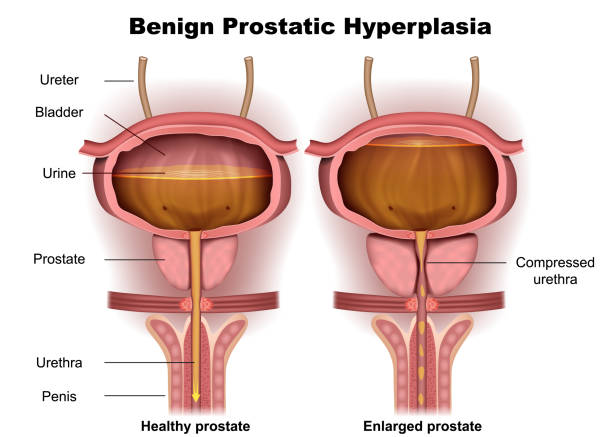
Benign Prostatic Hyperplasia (BPH) is a non-cancerous enlargement of the prostate gland, commonly seen in men over 50 years of age. The prostate, a small gland located below the bladder, surrounds the urethra and plays a role in the male reproductive system. As men age, the prostate can grow larger, potentially causing urinary problems by compressing the urethra.
An enlarged prostate can cause symptoms that may bother you, such as blocking the flow of urine out of the bladder. It also can cause bladder, urinary tract or kidney problems.
The symptoms of BPH can vary but commonly include:
The prostate gland is located beneath the bladder. The canal that moves urine from the bladder out of the penis is called the urethra. This gland can press through the center of the prostate. When the prostate gets bigger, it starts to block urine flow.
The prostate is a gland that typically keeps growing throughout life. This growth often enlarges the prostate enough to cause symptoms or block urine flow. Most prostate gland enlargement is non-cancerous enlargement.
Age
BPH is rare in men under 40 but becomes more common as men age.
Family history
A family history of prostate problems can increase the risk.
Diabetes and Heart Disease
Studies suggest that diabetes, heart disease, and beta blockers might increase the risk.
Lifestyle
Obesity raises the risk of BPH. Exercise can help lower the risk.
Diagnosing BPH involves several steps, including:
Your doctor will take a detailed medical history and perform a physical examination, evaluating the IPSS score card, and a digital rectal exam (DRE) to check the size and shape of the prostate.
This test checks for signs of infection or other conditions that could cause similar symptoms.
Elevated PSA levels can indicate an enlarged prostate, but higher levels can also be due to prostate cancer or other conditions.
This test measures the strength and amount of your urine flow.
This test determines how much urine remains in the bladder after urination.
Ultrasound or MRI may be used to evaluate the prostate and urinary tract.
Many treatments can help Benign Prostatic Hyperplasia (BPH). These include medicines, surgery and other procedures. The right option depends on things such as your symptoms, size of your prostate and other health problems you might have.
We understand the impact of enlarged prostate and frequent urinations can have on your quality of life. Our team of compassionate healthcare professionals is here to offer personalized care and support throughout your journey. We specialize in advanced diagnostic techniques and a range of treatment options tailored to meet your individual needs.
contact Us
© 2025 created by Nexus Web Creation