

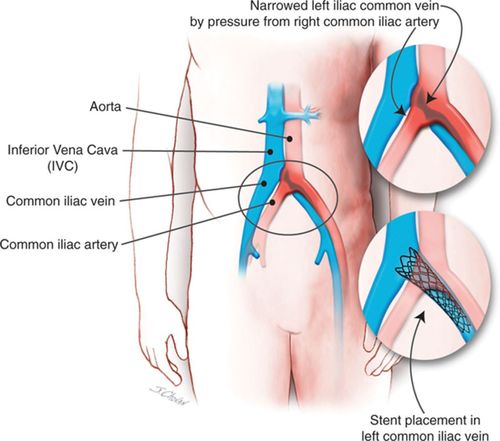
May-Thurner Syndrome (MTS) is a condition characterized by the compression of the left common iliac vein by the right common iliac artery, leading to an increased risk of blood clots and venous insufficiency. This compression can impede blood flow through the left iliac vein, increasing the risk of developing blood clots (deep vein thrombosis, or DVT) in the affected vein. MTS is a relatively rare condition but can have significant implications for venous health.
This condition is primarily caused by the anatomical relationship between the right common iliac artery and the left common iliac vein. The right common iliac artery runs over the left common iliac vein, which is compressed by the right common iliac artery, which then can reduce blood flow and increase the risk of clot formation.
Over time, this compression can lead to damage to the vein wall and predispose to clot formation.
Symptoms of May-Thurner Syndrome can vary and may include:
Particularly in the left leg.
Open sores that may develop due to chronic venous insufficiency.
Discomfort or pain in the left leg.
Changes in skin color or texture in the affected leg.
Increased visibility of veins in the left leg.
Evaluation of symptoms and potential risk factors.
Checking for swelling, pain, and other signs of venous obstruction.
To assess blood flow and identify clots.
Detailed imaging of the veins to visualize compression and blood flow.
Non-invasive imaging to evaluate the veins.
Image guided ultrasound is performed to precisely locate the iliac femoral, popliteal and/or tibial vein compression and determine the exact percentage of stenosis for assessment of May-Thurner Syndrome.
To prevent the clot from growing and reduce the risk of new clots forming. Examples: Heparin, warfarin, rivaroxaban, apixaban.
To be worn on legs to improve blood flow, reduce swelling and prevent complications.
Placement of a stent in the left common iliac vein to alleviate compression can reduce symptoms and improve venous outflow.
Balloon angioplasty may be used in conjunction with stenting to widen the compressed vein.
Lifestyle Modifications: Regular exercise, maintaining a healthy weight, and avoiding prolonged periods of immobility.
Regular Monitoring: For individuals with diagnosed MTS, regular follow-up with a healthcare provider is essential.
Early Diagnosis and Treatment: Addressing symptoms and potential complications early can help manage the condition effectively.
We specialize in providing care of venous vascular care with a focus on patient safety, comfort, and personalized care. Our team of experienced doctors are experts in the field, utilizing state-of-the-art technology and techniques to deliver exceptional outcomes for our patients.
We understand that considering treatment for venous disease can be daunting. Our compassionate healthcare team is here to guide you through every step of your journey, from initial consultation to post-procedure follow-up care. We prioritize clear communication, education, and patient empowerment to ensure you make informed decisions about your health.
© 2025 created by Nexus Web Creation