

Uterine fibroids, also known as leiomyomas or myomas, are benign tumors and are non-cancerous growths that develop within the uterus. About 50%-80% women have fibroids, and they occur most often in people between 30-50 years of age.
They vary in size, ranging from small seedlings (0.5cm) that can be undetectable to the naked eye, to bulky masses as big as a large grapefruit (~10 cm) that can distort the uterus’ shape.
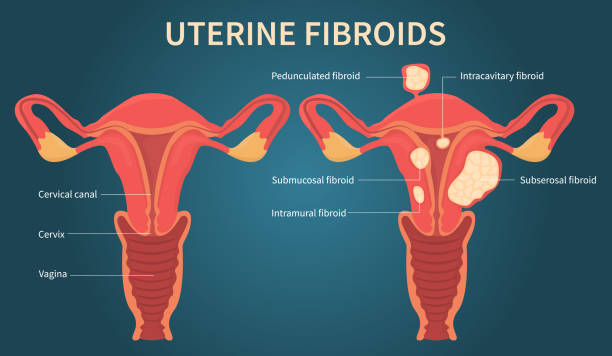
Intramural fibroids are the most common type and imbedded into the muscular wall of the uterus
Subserosal fibroids are the most common type and imbedded into the muscular wall of the outer aspect of the uterus
Submucosal fibroids grow under the lining of the inner surface of the uterus and can become quite large and grow into the pelvis.
Pedunculated fibroid can be either subserosal or submucosal and hang from a stalk either inside or outside the uterus.
While some women with uterine fibroids experience no symptoms, most women may have:
The exact cause of uterine fibroids is not known, but healthcare providers believe that estrogen and progesterone play a key role. Several risk factors can also play a role in chances of developing fibroids which may include:
Family history of fibroids
Early onset of menstruation
Obesity and high Body Mass Index (BMI)
Not having children
Certain ethnic groups (like African American, Hispanic women) are known to have higher incidence
Diagnosis of Uterine Fibroids may involve:
Discussing symptoms and their impact on daily life.
Such as ultrasound, MRI, or CT scan to visualize the size and location of fibroids.
Including pelvic exam to detect abnormalities.
Treatment for uterine fibroids depends on several factors, including the size and location of the fibroids, severity of symptoms, and your desire for future fertility. Options may include:
Monitoring fibroids without treatment if they’re not causing significant symptoms.
Open surgery such as myomectomy to remove fibroids while preserving the uterus, or hysterectomy for those who do not desire future pregnancies and have chosen to have their uterus removed (which is not necessary for the treatment of most non-cancerous fibroids).
Hormonal treatments or medications to help control symptoms such as heavy bleeding.
Including uterine artery embolization to shrink and eliminate fibroids which helps maintain the normal estrogen/progesterone levels in the body.
We understand the impact uterine fibroids can have on your quality of life. Our team of compassionate healthcare professionals is here to offer personalized care and support throughout your journey. We specialize in advanced diagnostic techniques and a range of treatment options tailored to meet your individual needs.
contact Us
© 2025 created by Nexus Web Creation